The Two Gentlemen of VeronaShakespeare’s First Folio
Scans: Bodleian Libraries, Arch. G c.7.
The First Folio
Bodleian Libraries, University of OxfordThis page image could not load.
This page image could not load.
On the page
Source transcription. Original spelling retained.
Reading The Two Gentlemen of Verona
Comedies · First Folio, 1623
The Two Gentlemen of Verona follows a friendship unsettled by travel and competing desires. Valentine leaves home; Proteus initially remains with Julia, then pursues Silvia after joining Valentine at court. Julia's disguise gives her access to conversations that would otherwise exclude her, but knowledge does not give her control over what she witnesses. The comedy's ending therefore deserves careful attention to the women as well as the reconciled friends. This First Folio text offers a way to follow the exchanges of letters, promises, and tokens through which characters try to make love legible to one another.
Valentine's first speech presents travel as an education and love as a reason to stay at home. Proteus answers with affection for his departing friend. Read the exchange before deciding how firmly either man holds the position he takes: the opening establishes claims about constancy that later actions will test.
Context: The Two Gentlemen of Verona at the Folger Shakespeare Library. Scans and transcription: Bodleian Libraries, Arch. G c.7.
On the opening page
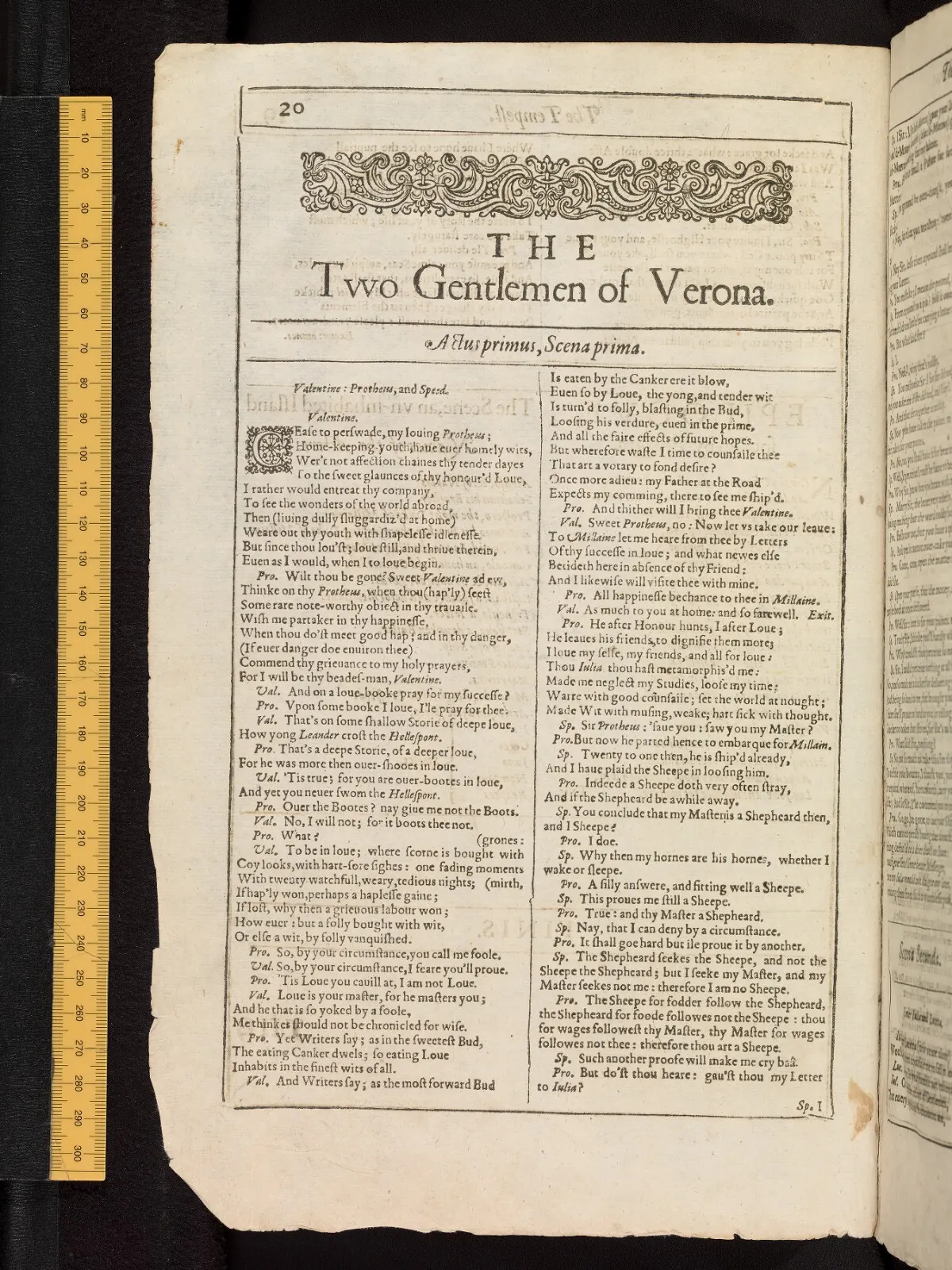
THE
Two Gentlemen of Verona.

Actus primus, Scena prima.

[Act 1, Scene 1]

Valentine: Protheus, and Speed.

Valentine.

CEase to perswade, my louing Protheus:

Home‑keeping youth, haue euer homely wits,

Wer't not affection chaines thy tender dayes

To the sweet glaunces of thy honour'd Loue,

I rather would entreat thy company,

To see the wonders of the world abroad,

Then (liuing dully sluggardiz'd at home)

Weare out thy youth with shapelesse idlenesse,

But since thou lou'st; loue still, and thriue therein,

Euen as I would, when I to loue begin.

Pro.

Wilt thou be gone? Sweet Valentine, adew,

Thinke on thy Protheus, when thou (hap'ly) seest

Some rare note‑worthy object in thy trauaile.

Wish me partaker in thy happinesse,

When thou do'st meet good hap; and in thy danger,

(If euer danger doe enuiron thee)

Commend thy grieuance to my holy prayers,

For I will be thy beades‑man, Vaelentine.

Ual.

And on a loue‑booke pray for my successe?

Pro.

Vpon some booke I loue, I'le pray for thee.

Ual.

That's on some shallow Storie of deepe loue,

How yong Leander crost the Hellespont.

Pro.

That's a deepe Storie, of a deeper loue;

For he was more then ouer‑shooes in loue.

Val.

'Tis true; for you are ouer‑bootes in loue,

And yet you neuer swom the Hellespont.

Pro.

Ouer the Bootes? nay giue me not the Boots.

Val.

No, I will not; for it boots thee not.

Pro.

What?

Ual.

To be in loue; where scorne is bought with
(grones:

Coy looks, with hart‑sore sighes: one fading moments mirth,

With twenty watchfull, weary, tedious nights;
An opening excerpt from the Bodleian transcription, with original spelling retained. Continue in the reader. Text CC BY 3.0.