Measure for MeasureShakespeare’s First Folio
Scans: Bodleian Libraries, Arch. G c.7.
The First Folio
Bodleian Libraries, University of OxfordThis page image could not load.
This page image could not load.
On the page
Source transcription. Original spelling retained.
Reading Measure for Measure
Comedies · First Folio, 1623
In Measure for Measure, the Duke transfers his authority to Angelo and then watches the city from a disguise. Angelo's prosecution of Claudio brings Isabella before a judge who turns the power to punish into an opportunity for sexual coercion. The play asks how someone can make an accusation heard when the accused controls the terms of public credibility. Read its placement among the Folio's comedies alongside its threats, substitutions, and uneven distribution of speech. A promised resolution does not remove the need to examine who is allowed to consent to it.
The Duke begins by discussing government with Escalus before calling for Angelo. His language presents delegated power as something that can be lent and worn. Follow those figures of speech into a play in which official appearances and concealed conduct become increasingly difficult to separate.
Context: Measure for Measure at the Folger Shakespeare Library. Scans and transcription: Bodleian Libraries, Arch. G c.7.
On the opening page
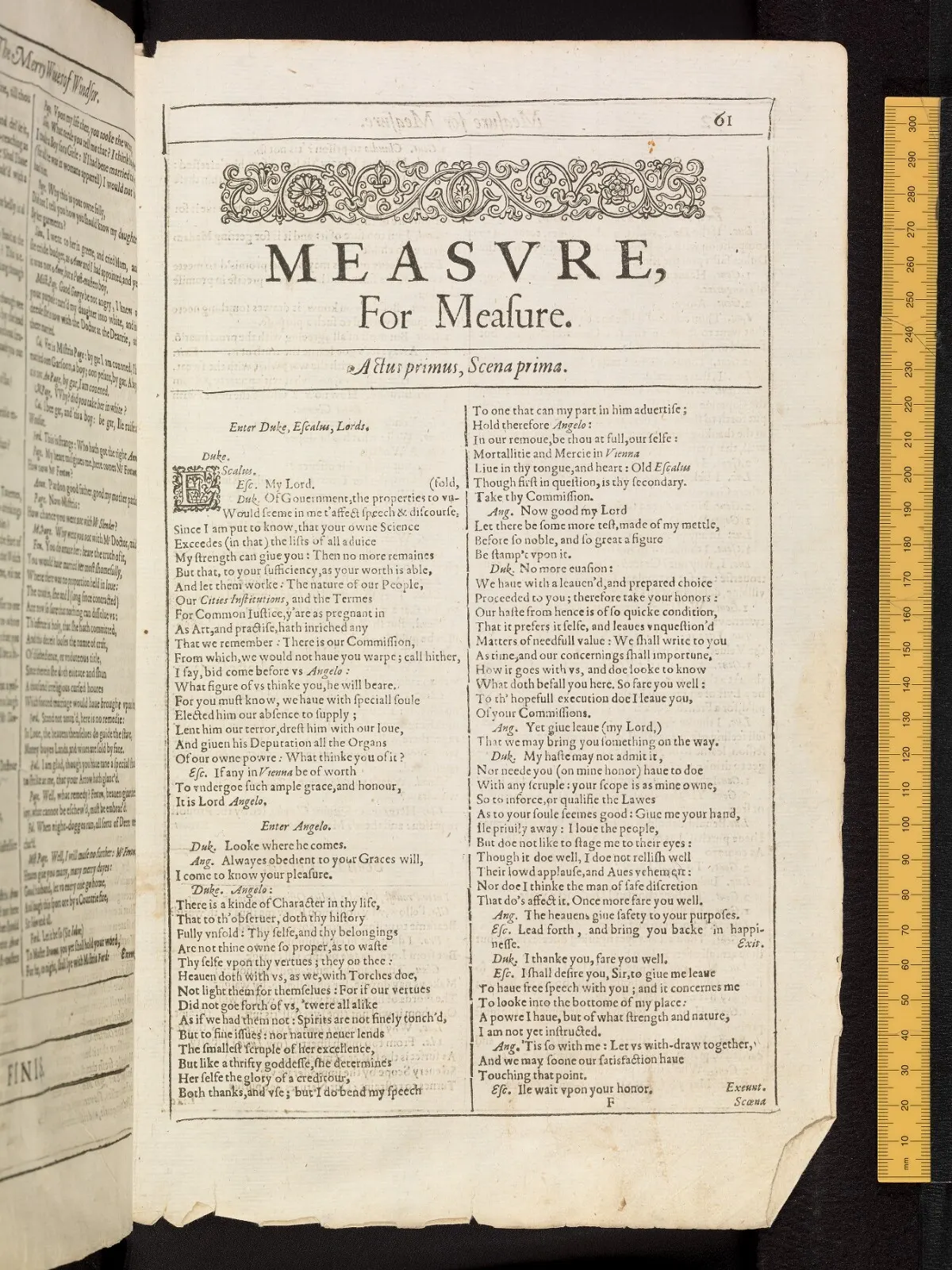
MEASVRE, For Measure. Actus primus, Scena prima. [Act 1, Scene 1] Enter Duke, Escalus, Lords. Duke. E Scalus. Esc. My Lord. Duk. Of Gouernment, the properties to vn (fold, Would seeme in me t'affect speech & discourse, Since I am put to know, that your owne Science Exceedes (in that) the lists of all aduice My strength can giue you: Then no more remaines But that, to your sufficiency, as your worth is able, And let them worke: The nature of our People, Our Cities Institutions, and the Termes For Common Iustice, y'are as pregnant in As Art, and practise, hath inriched any That we remember: There is our Commission, From which, we would not haue you warpe; call hither, I say, bid come before vs Angelo: What figure of vs thinke you, he will beare. For you must know, we haue with speciall soule Elected him our absence to supply; Lent him our terror, drest him with our loue, And giuen his Deputation all the Organs Of our owne powre: What thinke you of it? Esc. If any in Vienna be of worth To vndergoe such ample grace, and honour, It is Lord Angelo. Enter Angelo. Duk. Looke where he comes. Ang. Alwayes obedient to your Graces will, I come to know your pleasure. Duke. Angelo: There is a kinde of Character in thy life, That to th'obseruer, doth thy history Fully vnfold: Thy selfe, and thy belongings Are not thine owne so proper, as to waste Thy selfe vpon thy vertues; they on thee: Heauen doth with vs, as we, with Torches doe, Not light them for themselues: For if our vertues Did not goe forth of vs, 'twere all alike
An opening excerpt from the Bodleian transcription, with original spelling retained. Continue in the reader. Text CC BY 3.0.