Twelfth NightShakespeare’s First Folio
Scans: Bodleian Libraries, Arch. G c.7.
The First Folio
Bodleian Libraries, University of OxfordThis page image could not load.
This page image could not load.
On the page
Source transcription. Original spelling retained.
Reading Twelfth Night
Comedies · First Folio, 1623
Twelfth Night gives Viola a place in Illyria through the disguise of Cesario, a servant who carries Orsino's courtship to Olivia. The messenger becomes the object of affection, leaving Viola to speak in more than one capacity at once. Elsewhere in Olivia's household, a forged letter encourages Malvolio to perform a version of himself that others can mock. Reading these plots together brings different uses of deception into focus. Some disguises make survival possible; other performances are arranged for an unwilling participant. The Folio lets readers follow the instructions, clothing, and misunderstandings through which those performances take shape.
Orsino opens by asking for music, then changes his request as its effect on him changes. His attention is directed toward his own experience of loving Olivia before she appears. Notice how the scene asks an audience to hear desire as something performed and repeatedly revised.
Context: Twelfth Night at the Folger Shakespeare Library. Scans and transcription: Bodleian Libraries, Arch. G c.7.
On the opening page
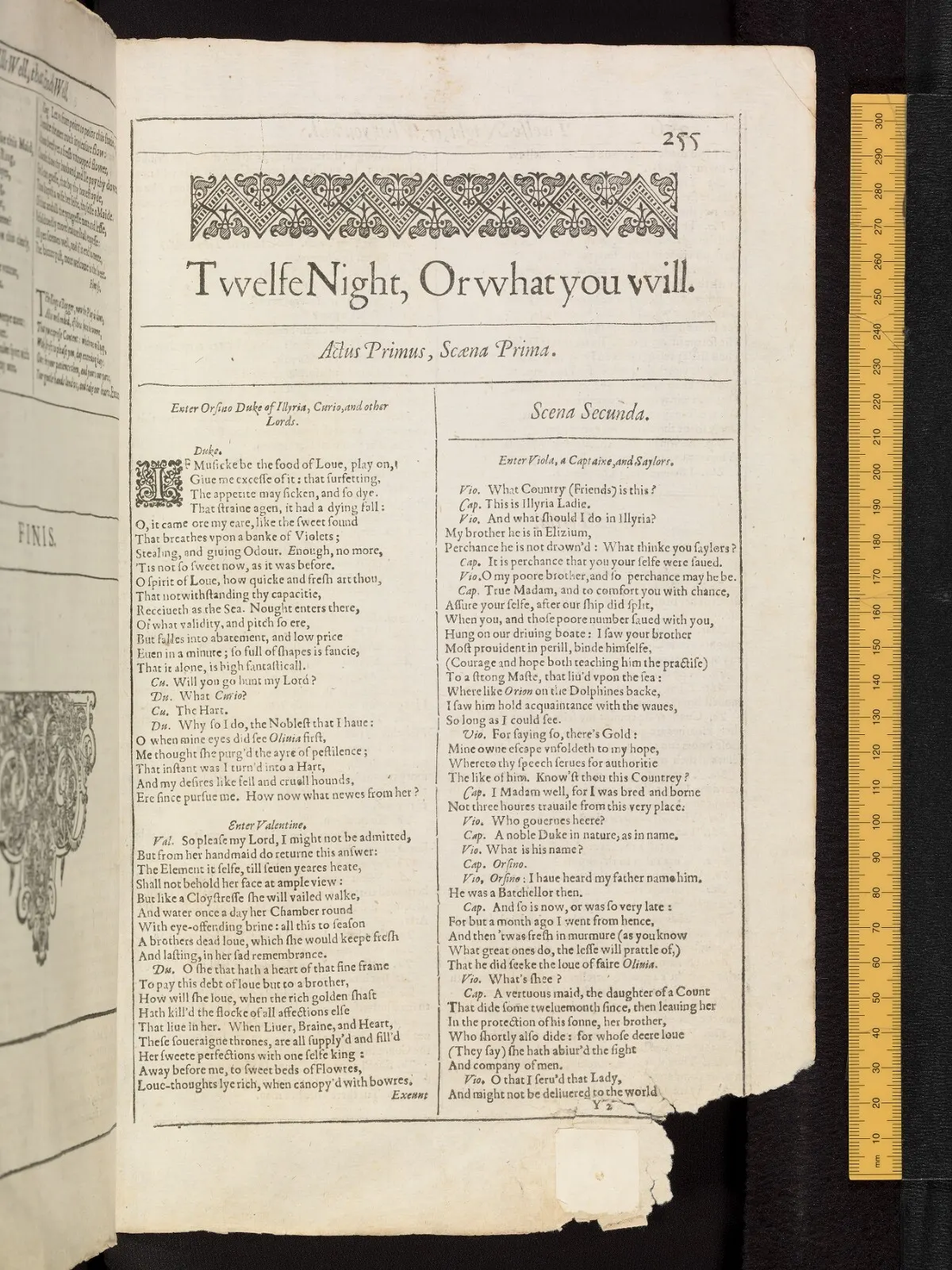
Twelfe Night, Or what you will.

Actus Primus, Scæna Prima.

[Act 1, Scene 1]

Enter Orsino Duke of Illyria, Curio, and other
Lords.

Duke.

If Musicke be the food of Loue, play on,

Giue me excesse of it: that surfetting,

The appetite may sicken, and so dye.

That straine agen, it had a dying fall:

O, it came ore my eare, like the sweet sound

That breathes vpon a banke of Violets;

Stealing, and giuing Odour. Enough, no more,

Tis not so sweet now, as it was before.

O spirit of Loue, how quicke and fresh art thou,

That notwithstanding thy capacitie,

Receiueth as the Sea. Nought enters there,

Of what validity, and pitch so ere,

But falles into abatement, and low price

Euen in a minute; so full of shapes is fancie,

That it alone, is high fantasticall.

Cu.

Will you go hunt my Lord?

Du.

What Curio?

Cu.

The Hart.

Du.

Why so I do, the Noblest that I haue:

O when mine eyes did see Oliuia first,

Me thought she purg'd the ayre of pestilence;

That instant was I turn'd into a Hart,

And my desires like fell and cru[gap]ll hounds,

Ere since pursue me. How now what newes from her?

Enter Valentine.

Val.

So please my Lord, I might not be admitted,

But from her handmaid do returne this answer:

The Element it selfe, till seuen yeares heate,

Shall not behold her face at ample view:

But like a Cloystresse she will vailed walke,

And water once a day her Chamber round

With eye‑offending brine: all this to season

A brothers dead loue, which she would keepe fresh

And lasting, in her sad remembrance.

Du.

O she that hath a heart of that fine frame
An opening excerpt from the Bodleian transcription, with original spelling retained. Continue in the reader. Text CC BY 3.0.