Troilus and CressidaShakespeare’s First Folio
Scans: Bodleian Libraries, Arch. G c.7.
The First Folio
Bodleian Libraries, University of OxfordThis page image could not load.
This page image could not load.
On the page
Source transcription. Original spelling retained.
Reading Troilus and Cressida
Tragedies · First Folio, 1623
Troilus and Cressida sets desire within the prolonged conflict between Troy and the Greek forces outside it. Lovers and warriors are repeatedly assessed by other people, and their value shifts with the situation in which they are discussed. The play's arguments about honour can therefore be read beside its arguments about constancy. Neither term remains secure simply because a speaker invokes it. In the Folio, attend to the prologue, the movement between camps, and the scenes in which characters watch one another. Reputation becomes something produced through observation, retelling, and interested comparison.
The Prologue locates the action in an ongoing war rather than at its beginning. It describes the arrival of the Greek forces and the fortified city of Troy before turning toward the play's selected moment. That framing helps distinguish the story performed here from the larger history its audience may know.
Context: Troilus and Cressida at the Folger Shakespeare Library. Scans and transcription: Bodleian Libraries, Arch. G c.7.
On the opening page
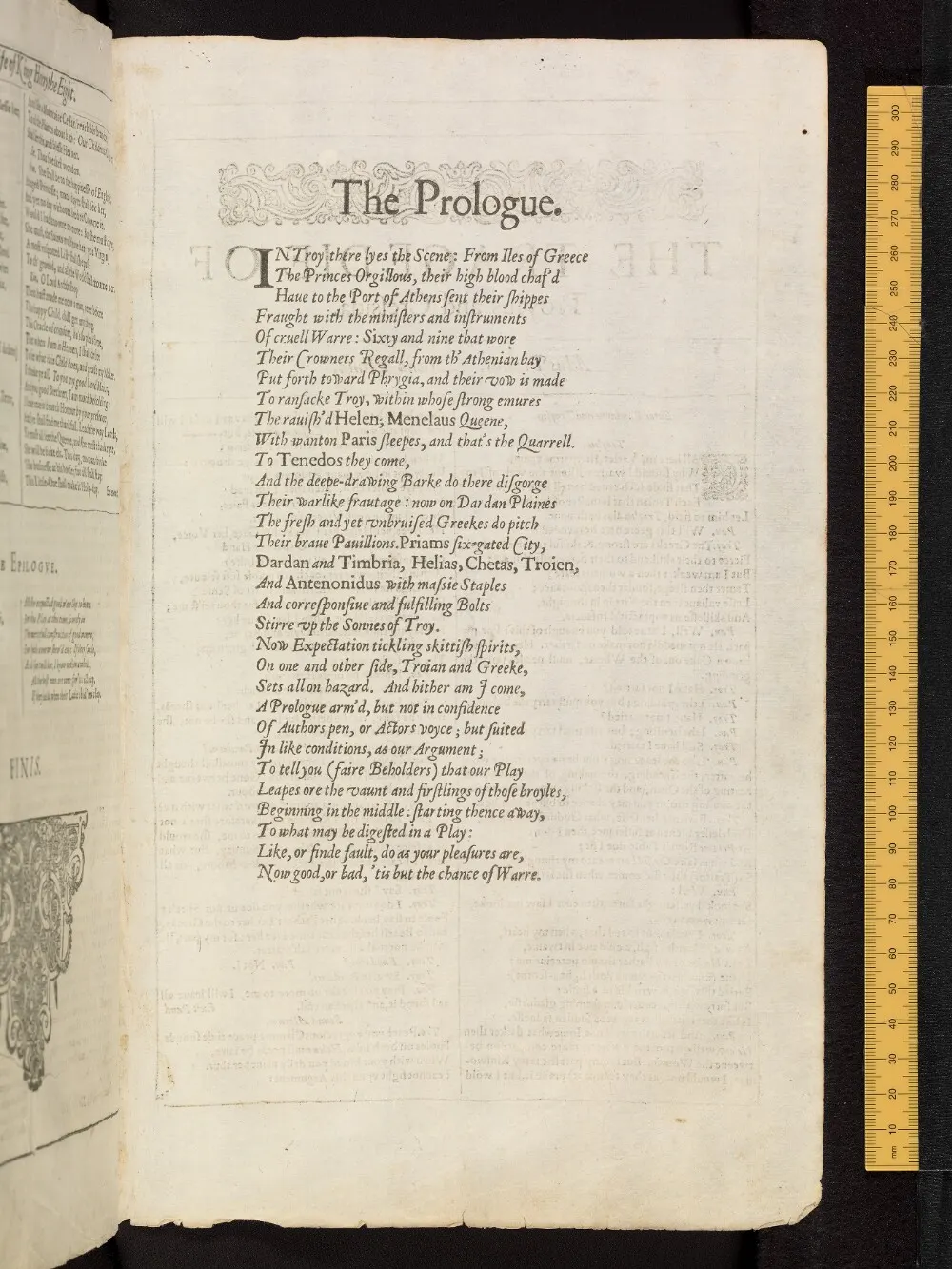
The Prologue.

IN Troy there lyes the Scene; From Iles of Greece

The Princes Origillous, their high blood chaf'd

Haue to the port of Athens sent their shippes

Fraught with the ministers and instruments

Of cruell Warre: Sixty and nine that wore

Their Crownets Regall, from th'Athenian bay

Put forth toward Phrygia, and their vow is made

To ransacke Troy, within whose strong emures

The rauish'd Helen, Menelaus Queene,

With wanton Paris Sleepes, and that's the Quarrell.

To Tenedos they come,

And the deepe‑drawing Barke do there disgorge

Their warlike frautage: now on Dardan Plaines

The fresh and yet vnbruised Greekes do pitch

Their braue Pauillions. Priams six‑gated City,

Dardan and Timbria, Helias, Chetas, Troien,

And Antenonidus with massie Staples

And corresponsiue and fulfilling Bolts

Stirre vp the Sonnes of Troy.

Now Expectaton tickling skittish spirits,

On one and other side, Troian and Greeke,

Sets all on hazard. And hither am I come,

A Prologue arm'd, but not in confidence

Of Authors pen, or Actors voyce; but suited

In like conditions, as our Argument;

To tell you (faire Beholders) that our Play

Leapes ore the vaunt and firstlings of those broyles,

Beginning in the middle. Starting thence away,

To What may be digested in a Play:

Like or finde fault, do as your pleasures are,

Now good, or bad, 'tis but the chance of Warre.
An opening excerpt from the Bodleian transcription, with original spelling retained. Continue in the reader. Text CC BY 3.0.