CoriolanusShakespeare’s First Folio
Scans: Bodleian Libraries, Arch. G c.7.
The First Folio
Bodleian Libraries, University of OxfordThis page image could not load.
This page image could not load.
On the page
Source transcription. Original spelling retained.
Reading Coriolanus
Tragedies · First Folio, 1623
Coriolanus begins with hunger and a dispute over how Rome distributes its resources. Caius Martius's military service wins him a name and public distinction, but political authority requires a kind of negotiation he resists. His relations with the citizens and with his mother, Volumnia, make the body central to public judgment: wounds can be evidence, and their display can become a demand. Read the Folio's crowd scenes as exchanges between speakers rather than as background noise. The citizens question, disagree, and act, shaping the conditions under which an individual can claim to represent Rome.
Armed citizens enter before the play's central soldier appears. Their first exchanges concern starvation, stored food, and the privileges of the patricians. The opening gives the audience a material grievance to hear before Menenius offers his account of the body and its members.
Context: Coriolanus at the Folger Shakespeare Library. Scans and transcription: Bodleian Libraries, Arch. G c.7.
On the opening page
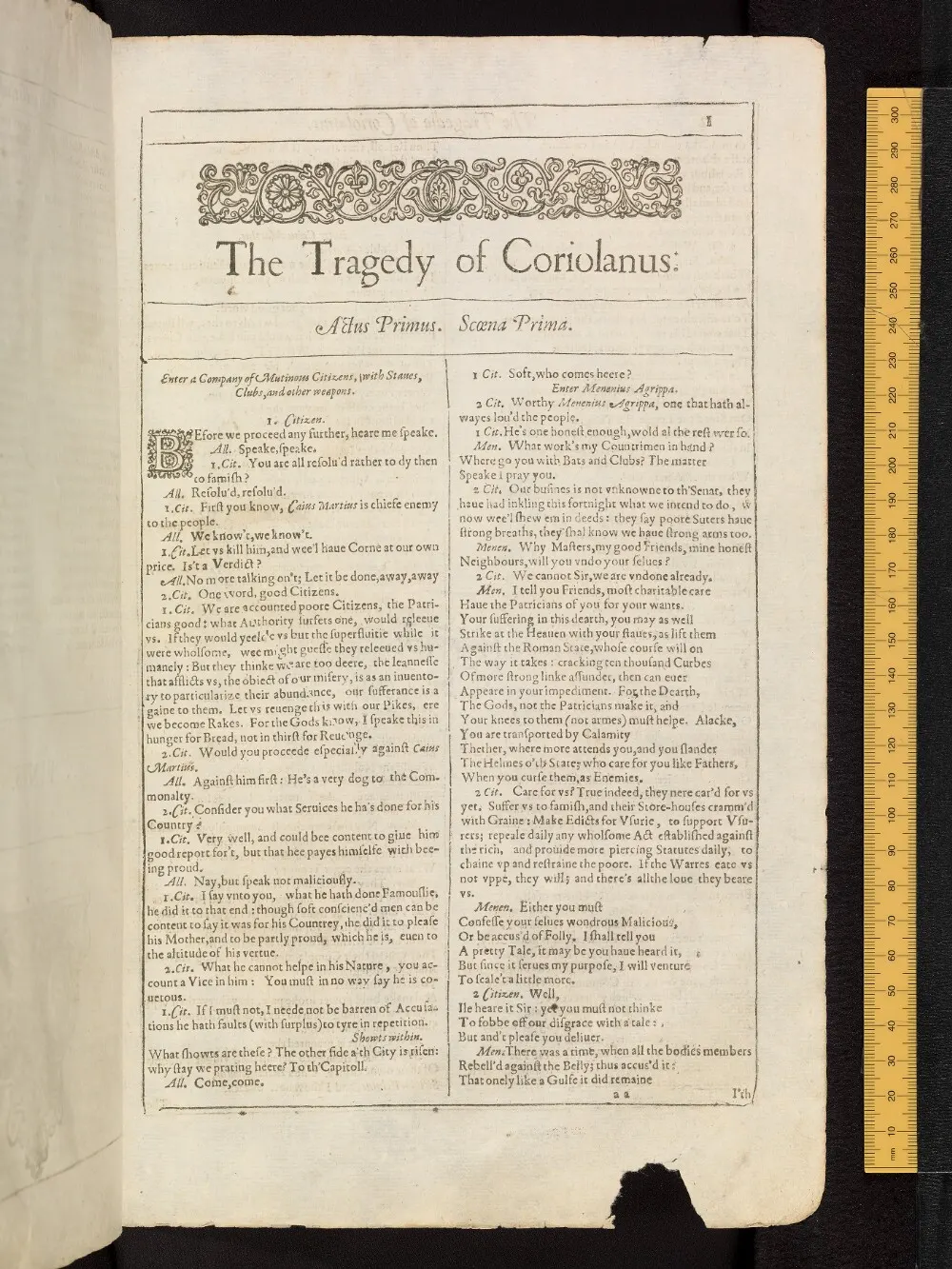
The Tragedie of Coriolanus. Actus Primus. Scœna Prima. [Act 1, Scene 1] Enter a Company of Mutinous Citizens, with Staues, Clubs, and other weapons. 1. Citizen. BEfore we proceed any further, heare me speake. All. Speake, speake. 1. Cit. You are all resolu'd rather to dy then to famish? All. Resolu'd, resolu'd. 1. Cit. First you know, Caius Martius is chiefe enemy to the people. All. We know't, we know't. 1. Cit. Let vs kill him, and wee'l haue Corne at our own price. Is't a Verdict? All. No more talking on't; Let it be done, away, away 2. Cit. One word, good Citizens. 1. Cit. We are accounted poore Citizens, the Patri cians good: what Authority surfets one, would releeue vs. If they would yeelde vs but the superfluitie while it were wholsome, wee might guesse they releeued vs hu manely: But they thinke we are too deere, the leannesse that afflicts vs, the obiect of our misery, is as an inuento ry to particularize their abundance, our sufferance is a gaine to them. Let vs reuenge this with our Pikes, ere we become Rakes. For the Gods know, I speake this in hunger for Bread, not in thirst for Reuenge. 2. Cit. Would you proceede especially against Caius Martius. All. Against him first: He's a very dog to the Com monalty. 2. Cit. Consider you what Seruices he ha's done for his Country? 1. Cit. Very well, and could bee content to giue him good report for't, but that hee payes himselfe with bee ing proud. All. Nay, but speak not maliciously. 1. Cit. I say vnto you, what he hath done Famouslie,
An opening excerpt from the Bodleian transcription, with original spelling retained. Continue in the reader. Text CC BY 3.0.