Titus AndronicusShakespeare’s First Folio
Scans: Bodleian Libraries, Arch. G c.7.
The First Folio
Bodleian Libraries, University of OxfordThis page image could not load.
This page image could not load.
On the page
Source transcription. Original spelling retained.
Reading Titus Andronicus
Tragedies · First Folio, 1623
Titus Andronicus places military honour and family obligation within an escalating exchange of violence. Titus returns to Rome expecting his service to carry authority, but acts committed in the name of duty generate demands for revenge. Lavinia's mutilation makes communication an urgent theatrical problem: her body is visible to others while the account she needs to give cannot be spoken. Reading the Folio requires attention to the objects and actions that make recognition possible. The play's violence is not separate from its questions about interpretation; characters must decide what bodies, gestures, and material traces can tell them.
The opening direction divides Saturninus and Bassianus, with their followers, between different entrances while tribunes and senators appear above. Before Titus arrives, the stage already represents competing claims to imperial authority. Notice how position, movement, and an armed following give visible form to political arguments.
Context: Titus Andronicus at the Folger Shakespeare Library. Scans and transcription: Bodleian Libraries, Arch. G c.7.
On the opening page
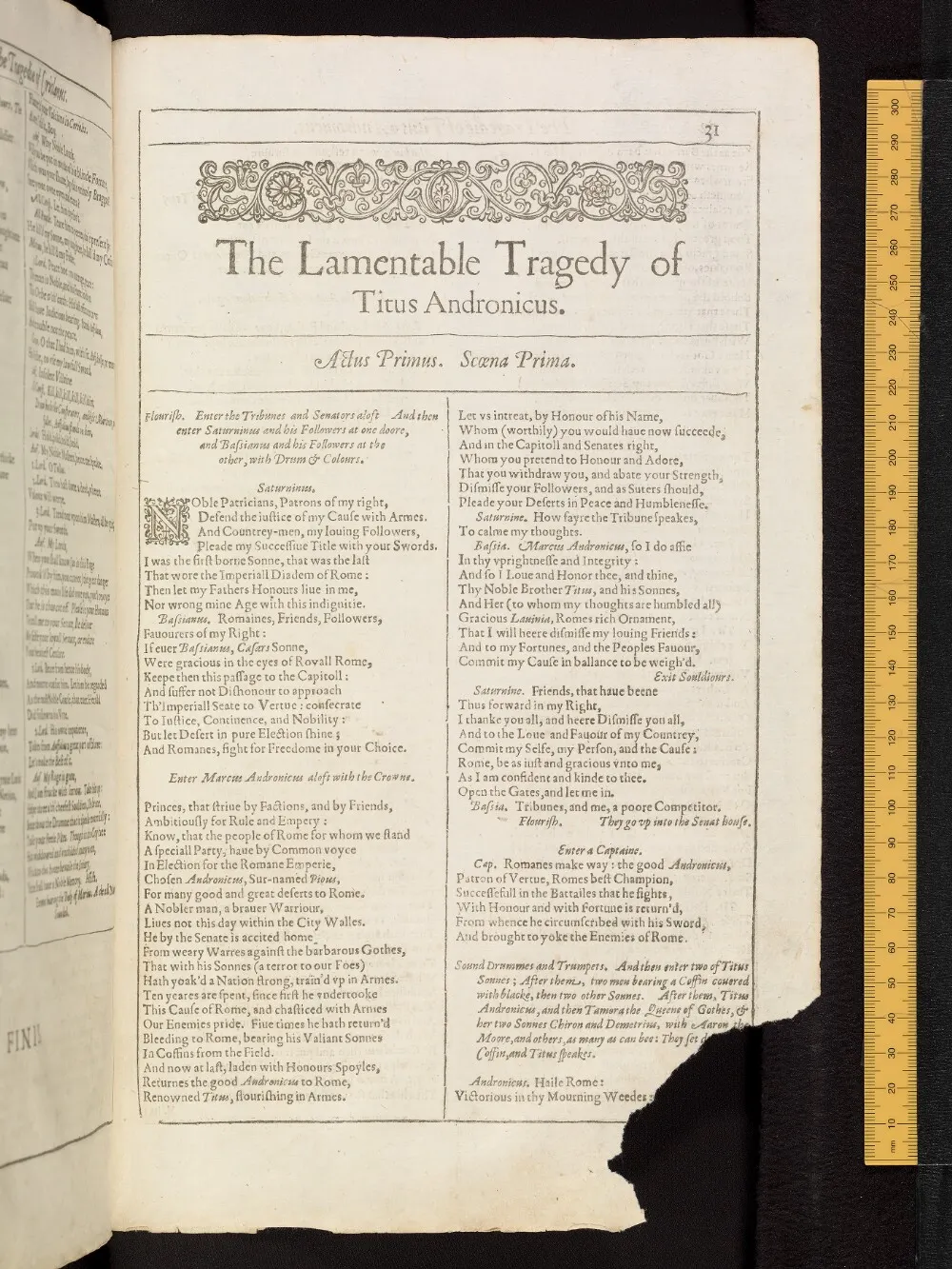
The Lamentable Tragedie of
Titus Andronicus.

Actus Primus. Scoena Prima.

[Act 1, Scene 1]

Flourish. Enter the Tribunes and Senators aloft And then
enter Saturninus and his Followers at one doore,
and Bassianus and his Followers at the
other, with Drum & Colours.

Saturninus.

Noble Patricians, Patrons of my right,

Defend the iustice of my Cause with Armes.

And Countrey‑men, my louing Followers,

Pleade my Successiue Title with your Swords.

I was the first borne Sonne, that was the last

That wore the Imperiall Diadem of Rome:

Then let my Fathers Honours liue in me,

Nor wrong mine Age with this indignitie.

Bassianus.

Romaines, Friends, Followers,

Fauourers of my Right:

If euer Bassianus, Cæsars Sonne,

Were gracious in the eyes of Royall Rome,

Keepe then this passage to the Capitoll:

And suffer not Dishonour to approach

Th' Imperiall Seate to Vertue: consecrate

To Iustice, Continence, and Nobility:

But let Desert in pure Election shine;

And Romanes, fight for Freedome in your Choice.

Enter Marcus Andronicus aloft with the Crowne.

Princes, that striue by Factions, and by Friends,

Ambitiously for Rule and Empery:

Know, that the people of Rome for whom we stand

A speciall Party, haue by Common voyce

In Election for the Romane Emperie,

Chosen Andronicus, Sur‑named Pious,

For many good and great deserts to Rome.

A Nobler man, a brauer Warriour,

Liues not this day within the City Walles.

He by the Senate is accited home

From weary Warres against the barbarous Gothes,

That with his Sonnes (a terror to our Foes)
An opening excerpt from the Bodleian transcription, with original spelling retained. Continue in the reader. Text CC BY 3.0.