The Taming of the ShrewShakespeare’s First Folio
Scans: Bodleian Libraries, Arch. G c.7.
The First Folio
Bodleian Libraries, University of OxfordThis page image could not load.
This page image could not load.
On the page
Source transcription. Original spelling retained.
Reading The Taming of the Shrew
Comedies · First Folio, 1623
The Taming of the Shrew places the courtship of Katherine and Petruchio inside another act of deception: a lord has Christopher Sly persuaded that he belongs to a different social rank. That frame makes performance and the imposition of an identity part of the reading from the beginning. Within the Padua story, marriage involves money, family authority, and attempts to control Katherine's conduct. Read her speeches alongside the circumstances in which she must deliver them. The question of what a performance means cannot be separated from who has the power to require it.
The Folio begins with Sly arguing with a hostess over broken glasses. After he falls asleep, a hunting party discovers him and the lord plans a transformation of his surroundings. Notice that the reader first encounters the mechanics of producing belief, before the central marriage plot begins.
Context: The Taming of the Shrew at the Folger Shakespeare Library. Scans and transcription: Bodleian Libraries, Arch. G c.7.
On the opening page
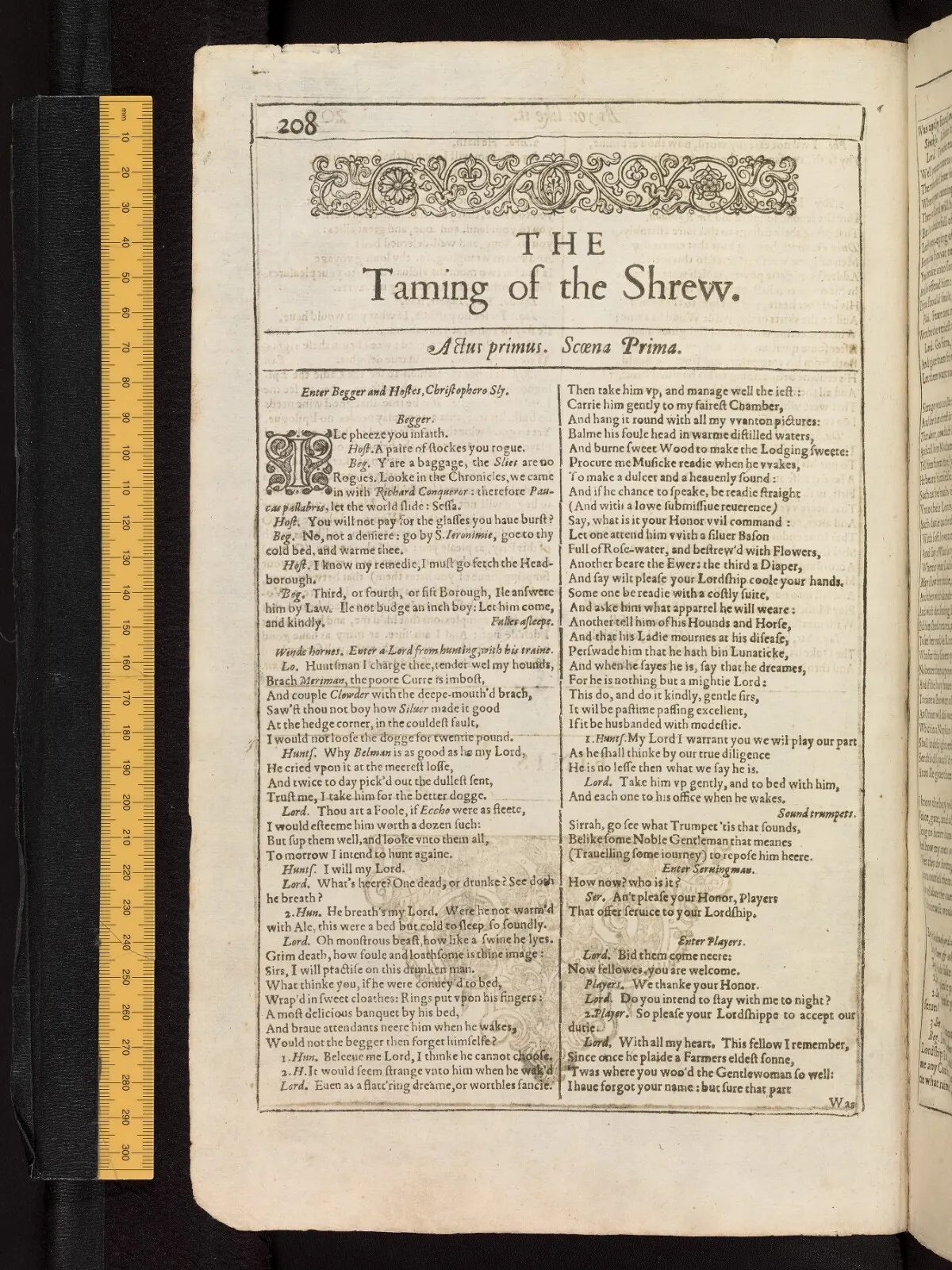
THE Taming of the Shrew. Actus primus. Scœna Prima. [Prologue, Scene 1] Enter Begger and Hostes, Christophero Sly. Begger. ILe pheeze you infaith. Host. A paire of stockes you rogue. Beg. Y'are a baggage, the Slies are no Rogues. Looke in the Chronicles, we came in with Richard Conqueror: therefore Pau cas pallabris, let the world slide: Sessa. Host. You will not pay for the glasses you haue burst? Beg. No, not a deniere: go by S. Ieronimie, goe to thy cold bed, and warme thee. Host. I know my remedie, I must go fetch the Head borough. Beg. Third, or fourth, or fift Borough, Ile answere him by Law. Ile not budge an inch boy: Let him come, and kindly. Falles asleepe. Winde hornes. Enter a Lord from hunting, with his traine. Lo. Huntsman I charge thee, tender wel my hounds, Brach Meriman, the poore Curre is imbost, And couple Clowder with the deepe‑mouth'd brach, Saw'st thou not boy how Siluer made it good At the hedge corner, in the couldest fault, I would not loose the dogge for twentie pound. Hunts. Why Belman is as good as he my Lord, He cried vpon it at the meerest losse, And twice to day pick'd out the dullest sent, Trust me, I take him for the better dogge. Lord. Thou art a Foole, if Eccho were as fleete, I would esteeme him worth a dozen such: But sup them well, and looke vnto them all, To morrow I intend to hunt againe. Hunts. I will my Lord. Lord. What's heere? One dead, or drunke? See doth he breath? 2. Hun. He breath's my Lord. Were he not warm'd with Ale, this were a bed but cold to sleep so soundly. Lord.
An opening excerpt from the Bodleian transcription, with original spelling retained. Continue in the reader. Text CC BY 3.0.