Love's Labour's LostShakespeare’s First Folio
Scans: Bodleian Libraries, Arch. G c.7.
The First Folio
Bodleian Libraries, University of OxfordThis page image could not load.
This page image could not load.
On the page
Source transcription. Original spelling retained.
Reading Love's Labour's Lost
Comedies · First Folio, 1623
Love's Labour's Lost begins with men who hope to organise learning by excluding desire. The King of Navarre and his companions promise study and restraint, but the arrival of the Princess of France and her attendants makes their programme difficult to maintain. Their arguments and performances offer a useful test of what verbal accomplishment can actually achieve. A speaker may be ingenious without understanding the person addressed. In the Folio, follow the letters, oaths, and entertainments as actions with audiences. The women are listeners who can judge those performances rather than simply supply their subjects.
The King's opening speech imagines study as a victory over time and desire. Berowne's resistance makes the practical terms of that ambition visible. Notice the movement from elevated language about lasting fame to specific rules governing sleep, food, and contact with women.
Context: Love's Labour's Lost at the Folger Shakespeare Library. Scans and transcription: Bodleian Libraries, Arch. G c.7.
On the opening page
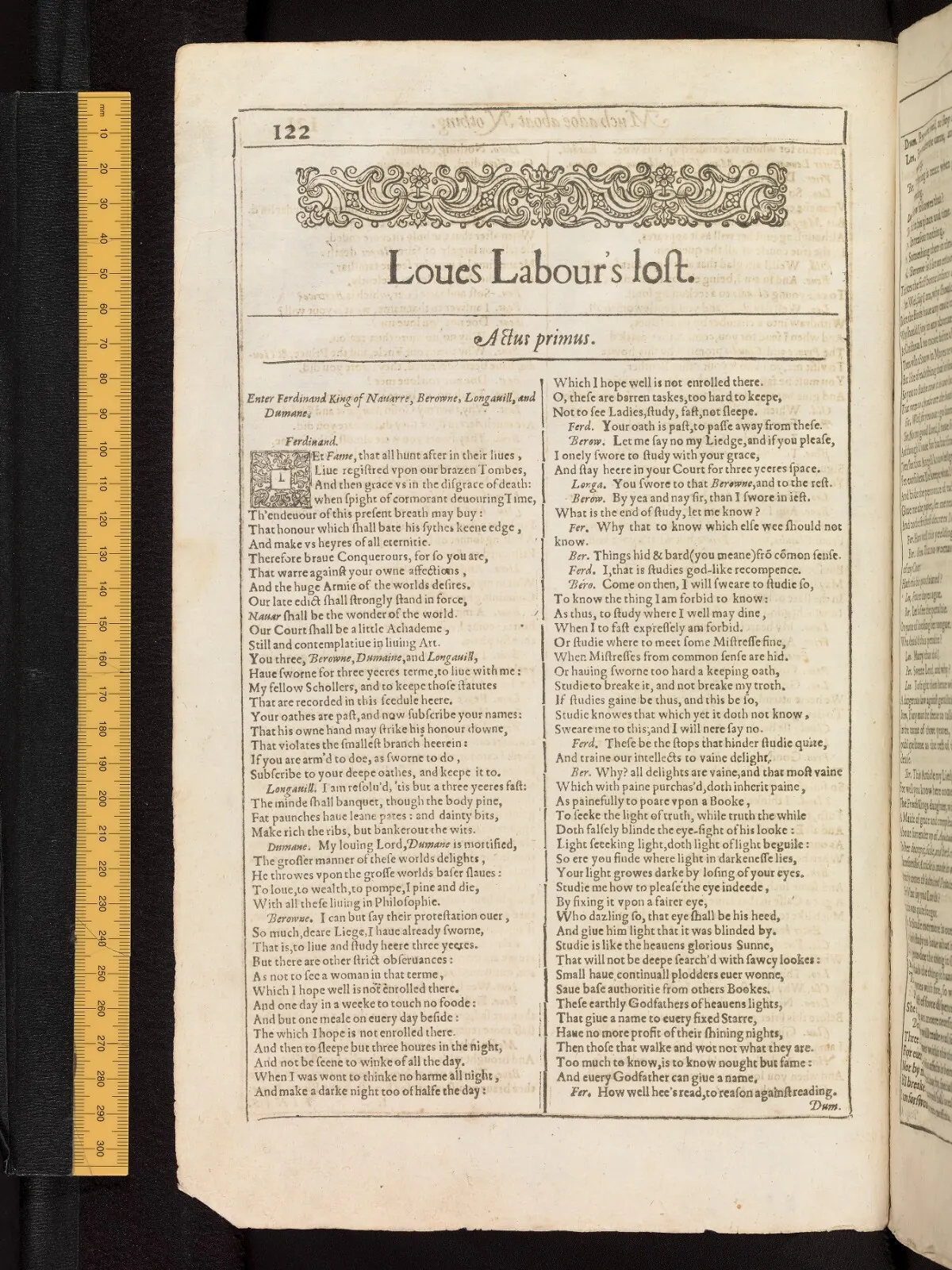
Loues Labour's lost.

Actus primus.

[Act 1, Scene 1]

Enter Ferdinand King of Nauarre, Berowne, Longauill, and
Dumane.

Ferdinand.

LEt Fame, that all hunt after in their liues,

Liue registred vpon our brazen Tombes,

And then grace vs in the disgrace of death:
when spight of cormorant deuouring Time,

Th'endeuour of this present breath may buy:

That honour which shall bate his sythes keene edge,

And make vs heyres of all eternitie.

Therefore braue Conquerours, for so you are,

That warre against your owne affections,

And the huge Armie of the worlds desires.

Our late edict shall strongly stand in force,

Nauar shall be the wonder of the world.

Our Court shall be a little Achademe,

Still and contemplatiue in liuing Art.

You three, Berowne, Dumaine, and Longauill,

Haue sworne for three yeeres terme, to liue with me:

My fellow Schollers, and to keepe those statutes

That are recorded in this scedule heere.

Your oathes are past, and now subscribe your names:

That his owne hand may strike his honour downe,

That violates the smallest branch heerein:

If you are arm'd to doe, as sworne to do,

Subscribe to your deepe oathes, and keepe it to.

Longauill.

I am resolu'd, 'tis but a three yeeres fast:

The minde shall banquet, though the body pine,

Fat paunches haue leane pates: and dainty bits,

Make rich the ribs, but bankerout the wits.

Dumane.

My louing Lord, Dumane is mortified,

The grosser manner of these worlds delights,

He throwes vpon the grosse worlds baser slaues:

To loue, to wealth, to pompe, I pine and die,

With all these liuing in Philosophie.
An opening excerpt from the Bodleian transcription, with original spelling retained. Continue in the reader. Text CC BY 3.0.