The Comedy of ErrorsShakespeare’s First Folio
Scans: Bodleian Libraries, Arch. G c.7.
The First Folio
Bodleian Libraries, University of OxfordThis page image could not load.
This page image could not load.
On the page
Source transcription. Original spelling retained.
Reading The Comedy of Errors
Comedies · First Folio, 1623
Two sets of twins turn everyday transactions into disputes over identity in The Comedy of Errors. A payment, a summons home, or an instruction to a servant reaches someone who understands a different situation. The result is physical comedy, but the errors also expose how quickly certainty can become accusation. The Folio opens with a father facing execution, placing the day's confusions inside a story of separation and loss. Track the names carefully as you read. The repeated names make people appear interchangeable to other characters while giving the audience the means to distinguish them.
The first exchange is between Egeon and the Duke of Ephesus. Before either pair of twins can generate a mistake, the Duke explains a law that threatens a visiting merchant's life. That opening makes citizenship and movement between cities part of the comedy's stakes from the start.
Context: The Comedy of Errors at the Folger Shakespeare Library. Scans and transcription: Bodleian Libraries, Arch. G c.7.
On the opening page
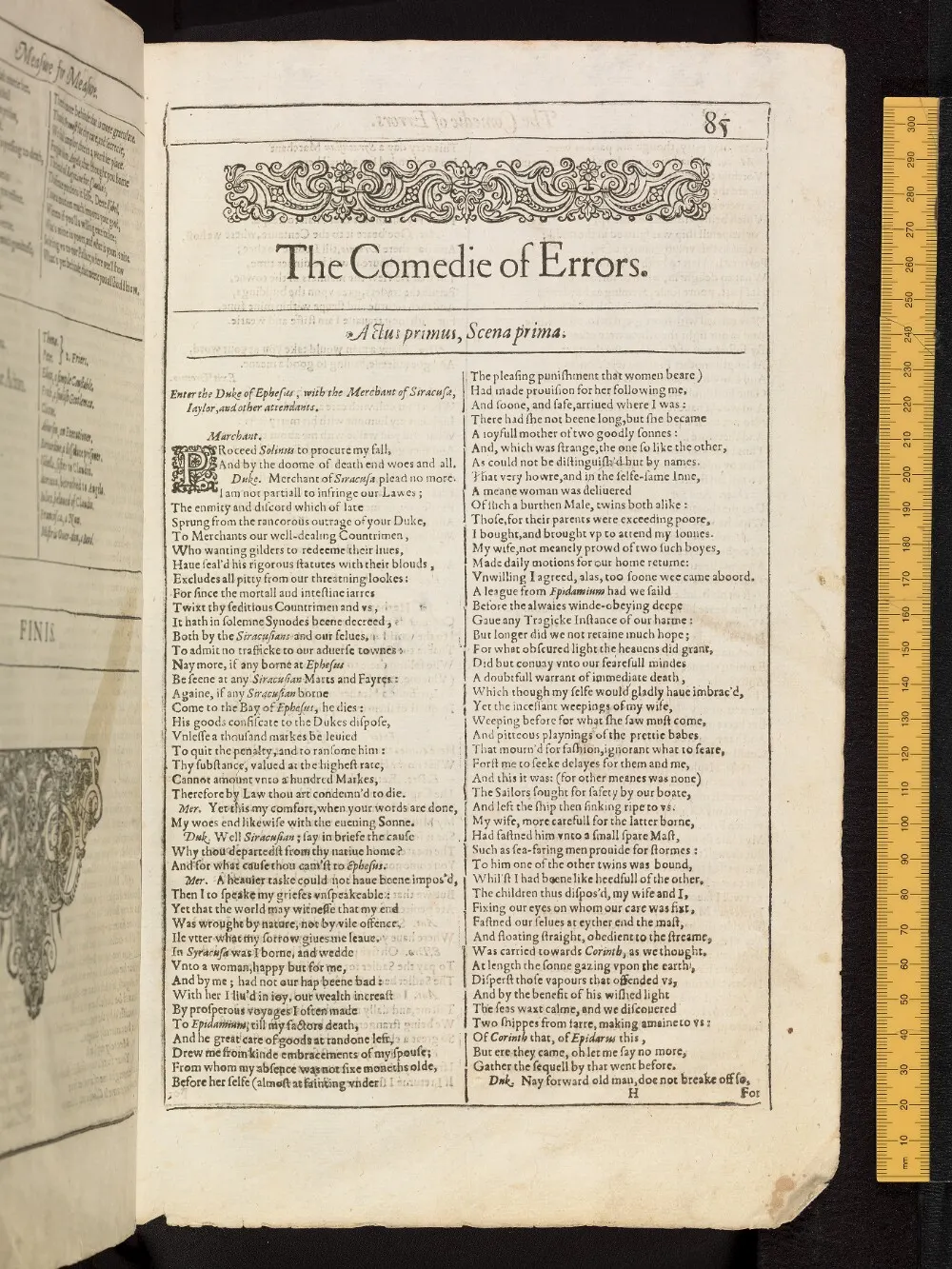
The Comedie of Errors.

Actus primus, Scena prima.

[Act 1, Scene 1]

Enter the Duke of Ephesus, with the Merchant of Siracusa,
Iaylor, and other attendants.

Marchant.

PRoceed Solinus to procure my fall,

And by the doome of death end woes and all.

Duke.

Merchant of Siracusa, plead no more.

I am not partiall to infringe our Lawes;

The enmity and discord which of late

Sprung from the rancorous outrage of your Duke,

To Merchants our well‑dealing Countrimen,

Who wanting gilders to redeeme their liues,

Haue seal'd his rigorous statutes with their blouds,

Excludes all pitty from our threatning lookes:

For since the mortall and intestine iarres

Twixt thy seditious Countrimen and vs,

It hath in solemne Synodes beene decreed,

Both by the Siracusians and our selues,

To admit no trafficke to our aduerse townes:

Nay more, if any borne at Ephesus

Be seene at any Siracusian Marts and Fayres:

Againe, if any Siracusian borne

Come to the Bay of Ephesus, he dies:

His goods confiscate to the Dukes dispose,

Vnlesse a thousand markes be leuied

To quit the penalty, and to ransome him:

Thy substance, valued at the highest rate,

Cannot amount vnto a hundred Markes,

Therefore by Law thou art condemn'd to die.

Mer.

Yet this my comfort, when your words are done,

My woes end likewise with the euening Sonne.

Duk.

Well Siracusian; say in briefe the cause

Why thou departedst from thy natiue home?

And for what cause thou cam'st to Ephesus.

Mer.

A heauier taske could not haue beene impos'd,

Then I to speake my griefes vnspeakeable:
An opening excerpt from the Bodleian transcription, with original spelling retained. Continue in the reader. Text CC BY 3.0.